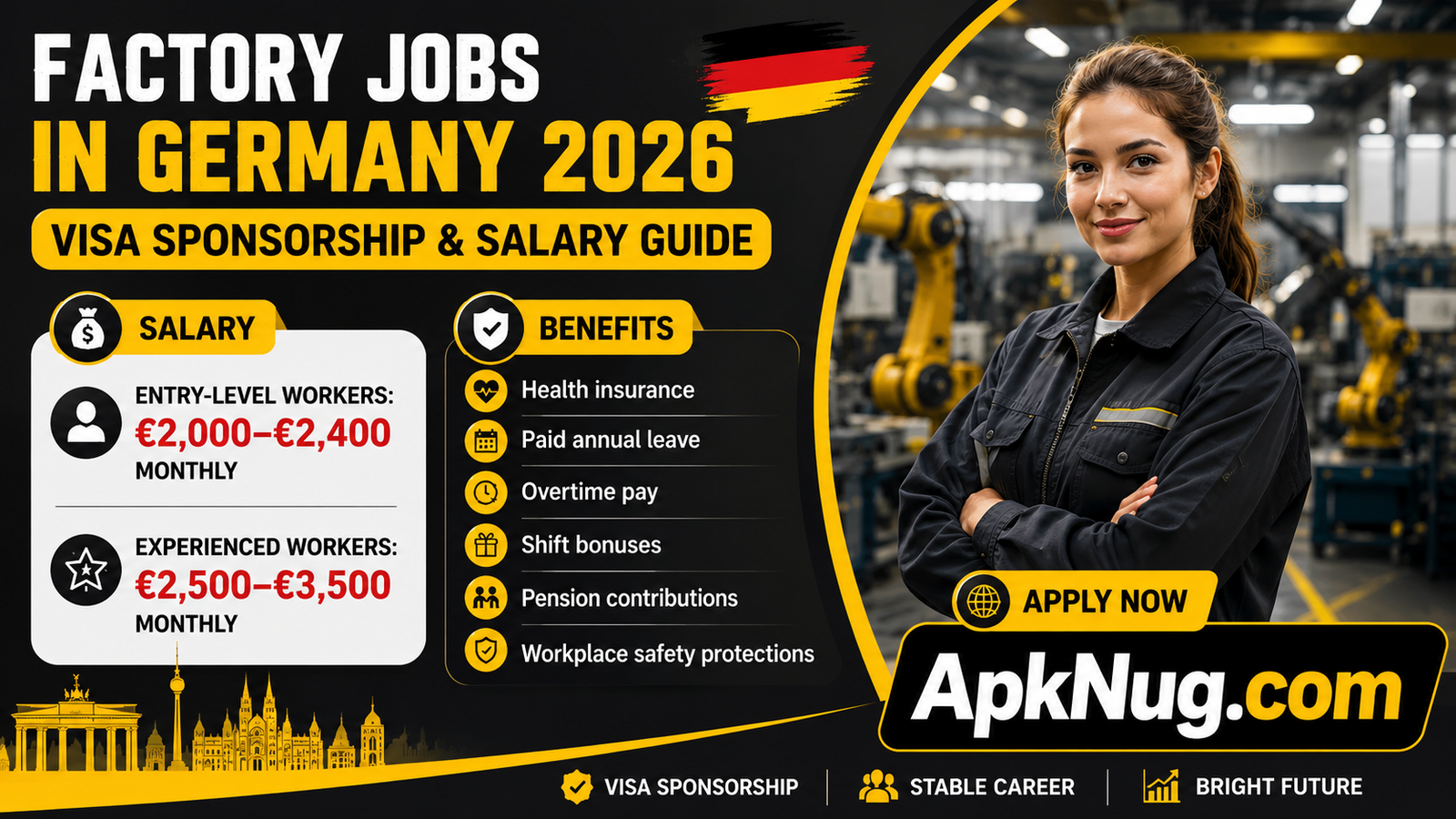
Factory Jobs in Germany 2026: Visa Sponsorship & Salary Guide
Germany remains one of the best economies in Europe, and globally there will be a demand for workers in factories in 2026. Due to the shortage of manpower in the manufacturing, packaging, logistics, automotive industry, food processing and warehouse sectors, foreign workers are being sought by many German employers through visa sponsorship schemes.
Factory Jobs in Germany Visa Sponsorship Jobs 2026 can provide competitive salaries, legal work permits, job safety, and career development potential to those seeking stable employment in Germany. There are numerous production lines, assembly lines, packaging stations, machine care, and warehouse stations where skilled workers are sought after by many factories in Germany.
Factory Jobs in Germany 2026 Overview
Germany has a robust industrial base and a well-developed manufacturing, engineering, automotive manufacturing, food processing, logistics and export sector. In response to the lack of skilled workers and the number of retired Germans, many companies are seeking to hire foreign workers.
Factory Jobs in Germany employment is for the physically active, flexible in working hours, and seeking secure positions. There are some jobs that ask for experience, and some jobs will train novices.
Foreign Workers tend to be employed in the following sectors:
- Automotive manufacturing
- Electronics assembly
- Manufacture of food and drink products
- Packaging factories
- Warehouse logistics
- Pharmaceutical manufacturing
- Textile production
- Rubber companies
Many employers offer visa sponsorship to qualified overseas candidates. There might also be a company that provides relocation assistance for employees, such as temporary housing or transportation during the first few months of work.
Germany’s employment law also puts regulations in place for employees, such as working hours, paid vacations, workplace safety and health insurance.
Ready More: Security Guard Jobs UK 2026 | SIA License & Salary Guide
Why Germany needs foreign Factory workers?
Germany continues to be in a situation of chronic labour shortages in a number of labour-intensive industries. There is a shortage of local workers who will work the physically demanding production and warehouse positions in many factories. Consequently, there is a growing trend in companies hiring employees from Asia, Africa, Eastern Europe, and other global areas.
This demand is driven by a number of factors:
- Aging Workforce
- Germany is one of the oldest European countries. High number of experienced workers retiring, leading to a shortage of labour in the manufacturing/industrial field.
- Industrial Growth.Growth of manufacturing industries
- German industries are still expanding, particularly in the field of vehicles, machinery, logistics and food. This expansion will drive hiring of production personnel and factory workers.This expansion will result in an increase in the demand for production personnel and factory workers.
- Unfilled positions in shift jobs
- There are many factories that run continuously. Employers need people to work daytime, evening, rotation shifts.
- Growth in Export Markets
- Germany is a world exporter of industrial products, automobiles, electronics and machinery. Stability in workforce is essential to ensure continuity in production.
- The situation creates a space for foreign workers in search of legal jobs and visa sponsorship in Europe.
Types of Factory Jobs in Germany Available
- In Germany, there are various types of Factory Jobs in Germany has different factory job types.
- Foreign workers can find a variety of positions in the factories in Germany. The skill level needed in various industries varies.
- Production Line Worker
- Production line workers help put together products, inspect products for quality, package products and operate simple machinery.
- Warehouse and Packaging Worker
- The employees perform inventory duties, product sorting, labeling boxes, shipment preparation, and storage system management.
- Automotive Factory Jobs in Germany
- There is a constant need in Germany for employees to assemble cars, work on machinery, inspect cars and perform manufacturing tasks.
- Food Processing Worker
- Packaging, sorting, Quality checking, cleaning and operating the machines are their jobs at food factories.
- Machine Operator Assistant
- Office and shop assistance to machine operators, loading materials, monitoring production processes and cleaning equipment areas.
- They work in textile and garment factories
- Textile workers assist in fabric production, packaging, stitching and product inspection.
Average Salary & Benefits 2026
The salaries of Factory Jobs in Germany are dependent on a variety of factors, including industry, the city in which the worker is employed, the amount of experience they have, and their working hours. In some cases, workers in specialty manufacturing or auto manufacturing may be paid more than those in general packaging.
Average Salary Range
Entry-level workers: €2,000–€2,400 monthly
Experienced workers: €2,500–€3,500 monthly
Work that goes beyond the standard 9-5, M-F schedule may be paid more.Earnings may be higher for overtime and night work.
The higher living costs and greater demand for industrial goods in cities, like Munich, Hamburg, Frankfurt, and Stuttgart, can all lead to better wages for their workers.
Common Benefits
Some employers offer extra facilities like:
- Health insurance
- Paid annual leave
- Overtime pay
- Shift bonuses
- Pension contributions
- Workplace safety protections
In some instances, transportation is also provided.
Some employers may also offer to have shared accommodation or help to find affordable housing during the transition.
The process of visa sponsorship is explained.
Visa sponsorship implies that a German employer backs your legal application for a job with a valid contract. This contract is applied for in the process of a work visa.
Typically, one would expect the following steps:
- Applying for Factory Jobs in Germany online
- Having a job offer from a German employer
- Employer furnishes documents related to the sponsorship
- Applying for a German work visa
- Please report to your Visa Appointment and present your documents
- Receiving visa approval
- Venturing abroad and entering into employment.
The visa application process is subject to the nationality of the applicant, the quality of documentation and employer compliance.
Applicants must always carefully check job offers and be wary of job agencies promising unrealistic things and asking for unusual or unexpected deposits.
Ready More: How to Apply for a Spain Work Visa 2026 | Step-by-Step Guide
Eligibility Requirements for Foreign Workers
Most Factory Jobs in Germany have the following requirements:
- Minimum Education
- There are employers who will accept candidates who have only basic secondary/high school education.
- Work Experience
- The factories may be looking for experience; however, there are jobs that do not require any experience.
- Physical Fitness
- Factory Jobs in Germany can entail standing for extended periods, lifting products, or operating in a fast paced environment.
- Clean Background
- Depending on visa requirements, applicants may be required to obtain Police clearance certificates.
- Valid Passport
- Passport must be valid as required for employment and visas abroad.
- Basic Language Skills
- Simple German phrases can mean a huge difference in employment, although basic English is usually sufficient.
Step-by-Step Guide to Apply
How to Apply
Start by learning what factories need before sending any paperwork. A clear plan often makes the difference when moving forward. Success tends to follow those who check details first, not rush in. Each step taken thoughtfully adds up over time.
Prepare a professional CV
Create a clear and professional resume that highlights:
- Work experience
- Education
- Technical skills
- Language abilities
- Factory or warehouse experience
A clean layout, like those common in Europe, works best for your resume. Try keeping it straightforward when you can.
Find Confirmed Job Listings
- Start your search for real factory positions by checking well-known job sites or visiting official business hiring sections online.
- Avoid suspicious advertisements that guarantee visas or ask for illegal payments.
Submit applications
Start by reaching out to several companies at once. That way, one opening might lead to another. Adjust your resume slightly every time you send it. Each job gets its own version, built around what they need.
Attend online interviews
Video calls or phone chats handle interviews at certain businesses.
Truth first – skills, experience, language. Show what you’ve got, nothing padded. Real talk wins every time. What you know matters most when it’s laid bare. No gloss, just facts that stand on their own.
Get Job Offer
Should things go your way, you might get a contract from the employer to help move the visa forward. Paperwork could follow, depending on how it unfolds.
- Apply for German Work Visa
- Start by sending your paperwork to the German embassy located where you live. Or try the visa office instead, if one operates nearby.
- Travel Start Work
- Once you get the green light, set up flights plus a place to stay ahead of beginning work in Germany.
Documents Needed for Germany Work Visa
Most people applying will likely have to provide these papers:
- Valid passport
- Job offer letter
- Employment contract
- Passport-sized photographs
- Educational certificates
Job history papers
- Visa application forms
- Proof of accommodation
- Medical coverage papers
- Police clearance certificate
Depending on where you are, rules might change along with your visa type.
Industries That Hire Factory Jobs in Germany
By 2026, some sectors across Germany will still look beyond borders for staff. Workers from abroad remain part of the plan in certain fields. Hiring outsiders isn’t ending soon in a few areas of the economy. Foreign labor stays on the radar for specific industries well into 2026. Not every business within Germany will stop seeking global talent by then.
- Automotive Industry
- Out of all places, Germany stands out when it comes to making cars. Factories in this sector often bring on people for putting vehicles together right where they’re built.
- Food Production Industry
- Workers handle tasks like processing inside food production sites. Packaging gets done by people on site too. Inspection duties fall to employees at these facilities. Logistics assistance comes from staff working there.
- Logistics and Warehousing
- Faster online shopping means more need for people who pack and ship orders.
- Electronics Manufacturing
- Folks find jobs at electronics plants, mainly handling tasks on production belts or assisting with tech duties. While some set up devices, others troubleshoot systems behind the scenes. Work shifts often start early, filling roles that keep manufacturing moving smoothly. These positions exist because machines still need human oversight daily.
- Pharmaceutical Production
- Packing materials for medicines needs helpers on assembly lines. People sort supplies in factories that make health products. Some jobs involve checking labels before items ship out. Workers load boxes where drugs get stored safely. Teams move containers through clean areas daily.
- Skills That Boost Job Prospects
- Some plant positions welcome newcomers, yet having specific abilities might boost your odds a lot.
- Basic German Language Skills
- Starting out in German makes talking easier, also fitting into work life. A bit of language goes a way toward connection while opening doors where you earn your keep.
- Forklift Or Warehouse Experience
- A boost to your application might come from warehouse certifications. Logistics experience works just as well. One builds credibility, the other shows practical know-how. Either path adds weight without extra explanation. What matters is proof of skill through recognized training or real work.
- Machine Operation Knowledge
- Handling equipment before makes it easier to step into factory roles. Working around machines builds familiarity that fits well on production lines.
- Teamwork and Discipline
- On time arrival matters most inside factory walls. Workers stick together when tasks pile up. Staying alert keeps everyone out of harm’s way.
- Adaptability
- When work hours change, bosses value people who go along without complaint. Flexibility shows up when the factory needs extra hands late at night. Some thrive when tasks shift suddenly. Others stand out by staying steady during rush periods. It matters most when orders pile high and time runs short.
- Living and Housing Expenses in Germany
- Costs of daily life in Germany shift based on where you live and how you choose to live. Bigger urban areas tend to cost more when compared to quieter, working-class communities.
Estimated Monthly Costs
- Shared accommodation: €300–€700
- Food: €200–€400
- Transportation: €50–€120
Web access along with power, water, gas might cost between eighty and one hundred fifty euros
Sharing flats with coworkers helps cut living expenses for numerous people in manufacturing jobs.
Besides its strong economy, Germany provides steady access to buses and trains, medical care, along with job safeguards helping people plan ahead. Though often overlooked, these basics make daily life smoother for many residents across cities and towns.
Applicant Errors to Skip
Wrong moves trip up plenty of overseas candidates – slowing things down or shutting doors fast. Mistakes that could have been skipped entirely.
- Using Unverified Agencies to Apply
- Before you hand over any private papers or money, look into who the company is. Get a clear picture of the employer first by checking their background. A smart move means digging up details ahead of time. Know exactly who you are dealing with prior to sending anything sensitive. Find proof they exist and operate legally before taking steps forward.
- Incomplete Documentation
- Paperwork gaps might slow down your visa. A single error could mean waiting longer. Mistakes on documents tend to cause holdups. Without correct papers, things stall fast. Wrong info often leads to delays. Missing proof creates problems too.
- Unrealistic Expectations
- Some plant positions come with housing perks, yet others pay barely enough to cover rent. Look into actual working terms before deciding.
- Ignoring Language Preparation
- Starting with just a little German might clear up confusion at work. Confidence from bosses often grows when employees make such an effort.
- Using Generic Resumes
- A fresh resume built just for Factory Jobs in Germany can open doors faster. One that fits warehouse roles often stands out more easily. Tailored details help employers see your fit right away.
Ready More: USA Visa Guide 2026: New Fees, Requirements & Interview Tips
Ways To Get A Job More Quickly
- Apply Early
- Some companies look for workers long before jobs open up.
- Learn Basic German
- A person who speaks clearly might stand out when being interviewed. How someone shares thoughts often matters more than expected in that setting.
- Focus on Real Employers
- Start by checking well-known job sites – also look directly at employer pages online.
- Highlight Relevant Skills
- Mention factory, warehouse, logistics, packaging, or machine-related experience clearly.
- Stay Organized
- Start by saving files online so visa steps move quicker. A folder on your device helps when forms come up. Having backups ready means less waiting later. Stored papers speed things when officials ask. Always keep a copy where you can reach it fast.
- Be Flexible With Locations
- Out in smaller towns across Germany, job prospects sometimes beat those crowded city centers where everyone fights for a spot. A quieter place might just hand you more chances to land work.
FAQs
- Can foreigners apply for Factory Jobs in Germany 2026?
- Folks from abroad often land jobs at German firms because factories and supply chains can’t find enough local staff. Workers cross borders to fill gaps where hiring has stalled in production lines and delivery networks. Plenty of businesses open doors to outsiders since empty roles pile up in workshops and transport hubs. Foreign hires step into spaces left bare when locals don’t apply for shifts in plants or freight centers.
- Is German language mandatory for Factory Jobs in Germany?
- It depends. While a few companies are fine with just English, knowing German opens more doors at work, helps you connect better with colleagues. Job options grow when language barriers shrink.
- Factory Jobs in Germany pay in Germany – how much do they usually earn?
- Making around €2,000 to €3,500 monthly is common, though what you earn often ties to your field, how long you’ve worked, or when you’re scheduled to clock in.
- Do employers provide visa sponsorship?
- Not every company does it, yet a few help workers get visas through signed job agreements. These documents come in handy when applying for legal work status abroad. Workers might find such backing makes the process smoother, though rules differ by country. Having an employer on board can shift how quickly paperwork moves forward.
- Are Factory Jobs in Germany physically demanding?
- Folks on factory floors often spend hours upright, moving items around while keeping up with relentless workflows.
Final Thoughts
Across, Factory Jobs in Germany offering visa support in 2026 open doors for people worldwide wanting steady roles in Europe. Because factories need more hands, positions keep appearing in areas like car making, food packing, and shipping centers. Though rules exist, many find their way into these roles through clear paths. While some focus on big cities, others build careers in quieter industrial towns. Since companies struggle to fill spots locally, they look beyond borders. Even so, each application moves at its own pace, depending on timing and fit. As needs grow, chances stay real – but only for those who prepare well.
Most people land Factory Jobs in Germany when they get ready ahead of time, know what to expect, send correct paperwork, while also keeping records up to date. Those working on communication abilities, holding solid work histories, then connecting with real companies usually see better results over time.
Out of all places to land a job overseas, Germany stands out – not because everyone says so, but because steady industries, strong rights on the clock, and clear hiring rules quietly pull professionals in. Come 2026, that quiet draw could mean more than just paperwork and visas for those ready to shift gears.